
How to Improve EDI in Public Services
· By Sultan Mahmood
Despite growing awareness, many UK public sector organisations continue to face barriers to truly inclusive workplaces and services. From subtle unconscious biases to systemic inequalities, the challenge of making equality, diversity and inclusion a lived reality can feel daunting. But understanding how to improve EDI in public services is not just important—it's essential for better outcomes for staff and service users alike.
Quick answer: To improve EDI in public services, combine regular expert-led training, robust audits, inclusive leadership, and clear reporting policies. Emphasise ongoing learning, address unconscious bias, and ensure continuous review and adaptation. These approaches embed equality, diversity, and inclusion into the culture and practice of UK organisations.
Key Takeaways
-
How to improve EDI in public services starts with visible leadership, staff engagement, and robust policies.
-
Regular EDI and unconscious bias training, plus eLearning, are key to enhancing equality, diversity and inclusion in public services.
-
Auditing, feedback, and data measurement ensure EDI efforts are impactful and accountable.
-
Legal compliance, including Public Sector Equality Duty training and EIA audits, underpins sustainable progress.
Why EDI Matters: The Foundation for Inclusive Public Services
Equality, Diversity, and Inclusion: The Heart of Public Service
Understanding how to improve EDI in public services means recognising that fair treatment, representation, and access are not just moral imperatives—they are legal and operational necessities. The UK’s Equality Act 2010 and Public Sector Equality Duty require organisations to proactively advance equality, foster good relations, and eliminate discrimination. However, the real transformation comes when EDI is embedded at every level—policy, practice, and culture.
The Importance of Inclusivity in Public Sector Organisations
Greater inclusivity leads to better decision-making, improved staff wellbeing, and higher satisfaction among service users. According to research, diverse teams are more innovative and effective at solving complex problems. Yet, UK public services EDI challenges and solutions remain a live issue—especially as communities become more diverse. Embracing EDI is not just about compliance but about equipping organisations to respond to the needs of all citizens.
Best Practices for EDI Training in the UK
Delivering Effective EDI Training
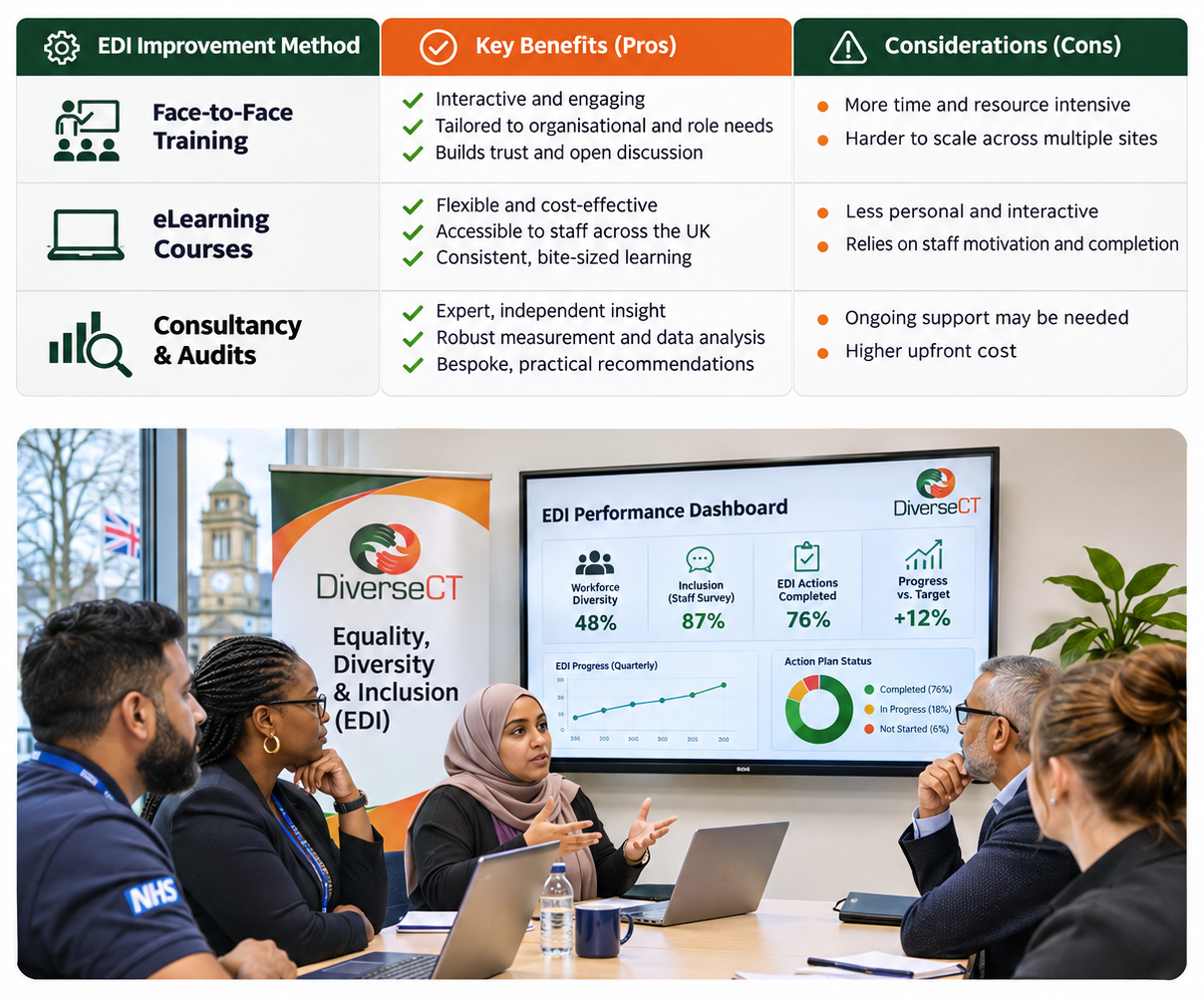
Implementing best practices for EDI training in the UK means choosing training tailored to local needs, roles, and contexts. This could include face-to-face workshops, effective eLearning courses for EDI improvement, or blended learning models. Regular, expert-led sessions foster an environment where staff feel confident discussing sensitive topics and can challenge inappropriate behaviour safely. DiverseCT’s training, for example, combines evidence-based content with practical case studies on successful EDI implementation for real impact.
Embedding Continuous Learning and Feedback
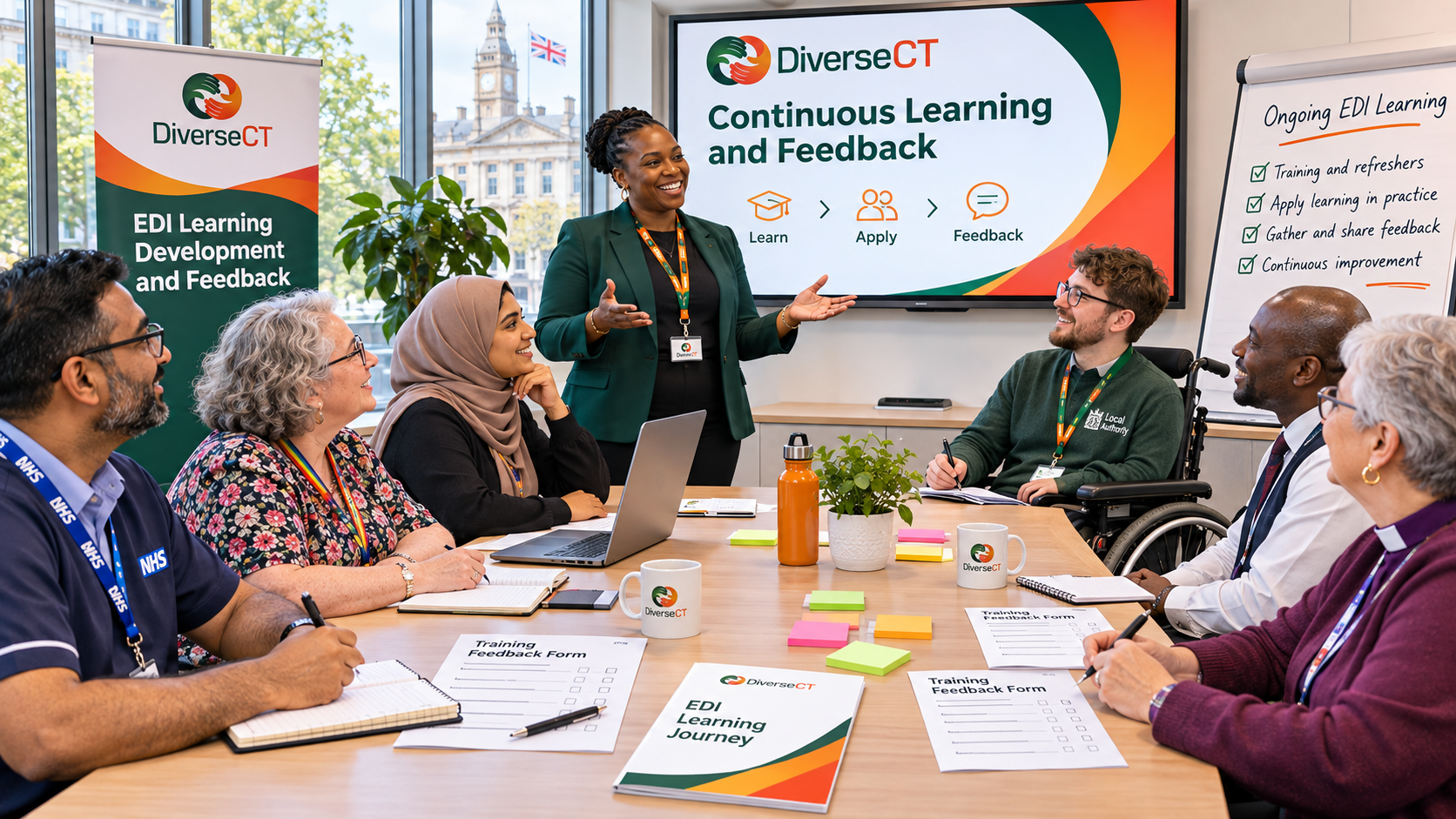
Learning about how to improve EDI in public services never ends. Ongoing refresher courses, interactive eLearning modules, and regular workshops keep EDI top of mind. It's essential to build feedback into every training cycle—questions to ask about EDI training effectiveness might include: Has behaviour changed? Are reporting mechanisms used more frequently? Do staff feel more confident addressing bias or discrimination?
Addressing Unconscious Bias and Tackling Islamophobia in Public Services
How to Conduct Unconscious Bias Training
Unconscious bias can undermine even the best-intentioned EDI policies. Understanding how to conduct unconscious bias training starts with recognising that everyone has biases, which may impact decisions and interactions unconsciously. Effective sessions use real-world scenarios, encourage self-reflection, and offer practical strategies for change. Public sector organisations benefit from regular, job-specific training that addresses the types of bias most relevant to their roles.
Strategies to Reduce Islamophobia in Public Services
Islamophobia remains a significant challenge in parts of the UK public sector. Strategies to reduce Islamophobia in public services include targeted training, open discussions, and policy reviews to ensure fair treatment and representation. Courses should tackle stereotypes, showcase positive case studies, and provide practical tools for responding to incidents. The impact of EDI consultancy services on public sector teams is most profound when these efforts are supported by leadership and reinforced by organisational policies.
Auditing, Measuring, and Sustaining EDI Progress
How to Perform EIA Training and Audits
Regular audits are essential for understanding how to improve EDI in public services and for meeting legal requirements. How to perform EIA training and audits involves teaching staff to identify risks and inequalities in policies, practices, or proposed changes. EIA (Equality Impact Assessment) audits provide a structured approach for predicting and preventing discrimination before it occurs. Public sector organisations that embed these processes demonstrate a genuine commitment to inclusivity and accountability.
Measuring EDI Success: Data and Accountability
It’s not enough to deliver training—outcomes must be measured. Metrics might include staff diversity, complaint rates, feedback from underrepresented groups, and progress against action plans. EDI consultancy services often help organisations develop dashboards and KPIs, ensuring ongoing improvement. Sharing case studies on successful EDI implementation within the organisation or wider sector helps build momentum and share best practice.
Leadership, Policy and Culture: The Cornerstones of EDI Success
The Role of Leadership in Promoting EDI
Leadership is the single most significant driver of EDI success. When leaders consistently champion equality, diversity and inclusion, organisational culture shifts. The role of leadership in promoting EDI includes setting clear expectations, allocating resources, embedding EDI into strategy, and being visible allies for underrepresented groups. Leaders should undergo the same EDI and unconscious bias training as their teams to model desired behaviours and values.
What is Public Sector Equality Duty Training?
What is public sector equality duty training? It’s specialist training ensuring that public bodies understand and fulfil their legal duties under the Equality Act 2010. This includes learning to identify potential discrimination, foster good relations, and demonstrate compliance during audits or inspections. Such training is especially vital for HR, managers, and anyone shaping policy or delivering front-line services in the UK public sector.
Culture Change: Embedding EDI in Daily Practice
Sustainable EDI change is a marathon, not a sprint. Embedding EDI into daily practice means making it a core part of recruitment, promotion, and service delivery. Initiatives such as staff networks, mentoring for minority groups, and open forums for discussion help maintain momentum. Recognising and celebrating progress is just as important as identifying areas for improvement.
How to Improve EDI in Public Services: Practical Steps for 2026
Step-by-Step Strategies for Public Sector Organisations
For those seeking to understand how to improve EDI in public services in 2026, here are concrete steps:
-
Secure visible, ongoing commitment from leadership at all levels.
-
Deliver regular, tailored EDI and unconscious bias training—mixing in-person, eLearning, and workshops.
-
Conduct EIA training and audits for all major policies, procedures, and projects.
-
Promote open communication, feedback, and clear reporting routes for EDI concerns.
-
Measure progress with data, share results, and celebrate successes.
-
Update policies and practices in response to feedback and new challenges.
Upcoming EDI Training Workshops in the UK
In 2026, a growing number of public sector bodies are investing in upcoming EDI training workshops in the UK. These sessions often combine lived experience speakers, interactive exercises, and sector-specific content. Partnering with experienced providers like DiverseCT ensures training is relevant, up-to-date, and aligned with the latest legal and societal developments. For more information on government expectations, see the official UK guidance on the Public Sector Equality Duty.
Frequently Asked Questions
How often should public sector organisations review their EDI policies?
Best practice is to review and update EDI policies annually, and after significant incidents or legislative changes. Regular reviews ensure policies reflect current needs and support continuous improvement in line with UK requirements.
What makes unconscious bias training effective in public services?
Effective unconscious bias training uses real-world scenarios, encourages honest reflection, and includes practical strategies for change. Success is measured by changes in behaviour and workplace culture, not just attendance.
Are eLearning courses suitable for all staff in public services?
eLearning courses are accessible and flexible, making them suitable for a wide range of roles. Combining eLearning with interactive workshops ensures all learning styles and operational needs are met.
How do EIA audits support EDI in public sector organisations?
EIA audits help organisations identify and address potential inequalities in policies and service delivery. They are critical tools for legal compliance and for proactively advancing equality and inclusion.
What role do staff networks play in improving EDI?
Staff networks provide safe spaces for underrepresented groups, support peer learning, and offer valuable feedback to leadership. They are a vital part of building an inclusive culture and driving sustained EDI progress.
Transforming your approach to EDI takes expertise and commitment. DiverseCT delivers expert-led EDI training, eLearning, audits, and consultancy services across the UK. Let us help you create lasting change—get in touch to enhance equality, diversity, and inclusion in your public service organisation today.